

Your Sleep and Heart Health: Expert Advice for Healthy Living
This article was reviewed by our Baystate Health team to ensure medical accuracy.
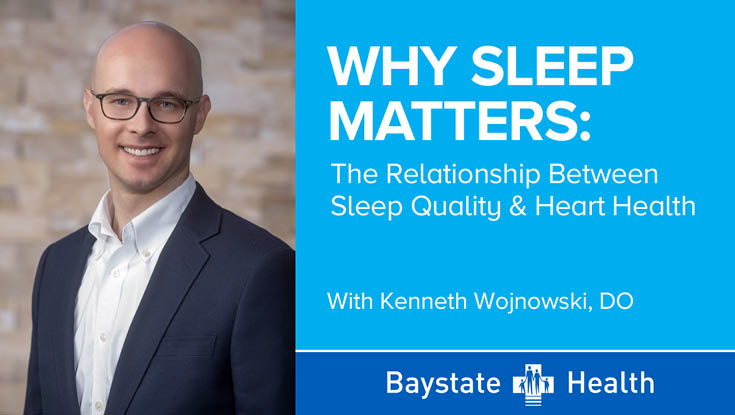
 Kenneth A. Wojnowski, DO
Key Takeaways
- Sleep is critical for heart health: During sleep, the heart lowers blood pressure and undergoes repair. Poor sleep—both in quantity and quality—can increase stress on the heart and accelerate arterial hardening.
- Insufficient sleep raises health risks: Chronic poor sleep is linked to higher risk of coronary artery disease, stroke, high blood pressure, obesity, type 2 diabetes, and high cholesterol.
- Both sleep duration and quality matter: Adults generally need at least seven hours of sleep. Quality sleep is uninterrupted and restorative; issues like long sleep latency or frequent awakenings reduce its benefits.
- Obstructive sleep apnea (OSA) is common and dangerous: 25–35% of adults experience OSA, which disrupts deep sleep and increases the risk of heart attack, stroke, and other cardiovascular problems.
- Improving sleep can reduce risk and improve health: Consistent sleep schedules, limiting caffeine, avoiding screen time before bed, and treating OSA (via CPAP or oral devices) can significantly enhance sleep quality and cardiovascular outcomes.

Most people think of sleep as a time of rest for the body, which may be true for some organ systems. During sleep, your body is actively repairing and replenishing many systems to ensure that your health is functioning at the highest level. Sleeping for shorter periods (poor quantity) or having poor quality of sleep may have significant effects on your heart.
Pulmonary, Critical Care and Sleep Medicine physician, Kenneth Wojnowski, DO explains, “When you sleep, your heart transitions into rest and repair mode. Your blood pressure should lower slightly as your vascular tone diminishes. When you sleep poorly, the heart is susceptible to hormones that cause an increase in stress on your heart and hardening of your arteries over time.
“Without the right amount of quality sleep,” says Dr. Wojnowski, “your body can’t take these critical steps to restore cardiovascular health, and your risk of serious health conditions goes up.”
The Risks of Poor Sleep Revealed
The American Academy of Sleep Medicine and the Sleep Research Society recommend at least seven hours of sleep per night for the average adult. However, research finds that more than one in three adults don’t get the recommended amount. The risks of this deficit are far more serious than feeling a bit groggy.
Over time, not getting enough quality sleep can lead to an increased risk of:
- Coronary artery disease
- Heart disease
- Stroke
- High blood pressure
- Obesity
- Type 2 diabetes
- High cholesterol
Dr. Wojnowski notes, “While all these conditions are concerning, the good news is that some of them can be improved by simply changing your sleep habits. For example, glucose metabolism may be improved by sleeping at least 7 hours per night. Better sleep also contributes to better control of blood pressure and improved weight management.”
Challenges to Getting a Good Night’s Sleep
According to Dr. Wojnowski, there are two components to a good night’s sleep: duration and quality.
Sleep Duration
“It’s widely held that the average adult needs seven hours of sleep to maintain vitality and mental well-being,” he says. “As with all averages, there are outliers. Some people can get by on five hours and be just fine, while others are at their best in the eight-hour range. Regardless of what an individual requires, problems arise when the need isn’t fully met.”
Common signs of insufficient sleep quantity include:
- Daytime sleepiness
- Low energy
- Lack of alertness or vigilance
- Poor reaction time
- Increased irritability, stress, anxiety, heightened emotions
Sleep Quality
Quality sleep is defined as restful, uninterrupted, and restorative slumber. Some of the factors impacting the quality of your sleep are how long it takes to fall asleep, known as sleep latency, and how many times you wake during the night.
“The amount of time it takes us to fall asleep plays a significant role in determining the quality of our rest,” says Dr. Wojnowski. “Most people fall asleep within 30 minutes of getting into bed. However, things like stress, sleep disorders, overall health, and the environment can make falling asleep difficult. Taking more than 30 minutes to fall asleep often goes hand in hand with less restorative sleep.”
Obstructive Sleep Apnea: A Hidden Threat to Heart Health
Once asleep, Dr. Wojnowski says 25-35% adult Americans find their sleep interrupted by obstructive sleep apnea (OSA).
“OSA occurs when there’s a partial or total blockage of airflow while you sleep. This most commonly occurs when the muscles of your tongue relax and temporarily close off the airway. When this happens, your body senses the change in breathing and briefly wakes you up to restart normal airflow. You may not remember these awakenings, but they can happen many times throughout the night. In mild cases, a person may have 5-15 abnormal breathing events per hour, while in severe cases they may have more than 30 events per hour. Because of these repeated disruptions, the body is unable to progress towards the deeper sleep stages that are necessary for vitality and improved health outcomes,” Dr. Wojnowski explains.
Tips for Addressing Sleep Issues
If you find yourself struggling to fall asleep, waking frequently, or simply feeling exhausted during the day, you may want to reconsider your sleep routine. Even small, consistent changes can lead to better sleep and you waking up feeling truly rested.
A few changes to consider include:
- Establish and keep the same sleep schedule, even on weekends
- Avoid large meals or vigorous exercise before bedtime
- Resist the urge to take naps
- Avoid caffeine in the afternoon and evening
- Refrain from screen time (tv, cell phone, electronic pads) prior to sleep
- If you snore, avoid sleeping on your back.
When to Talk to Your Doctor About Sleep Problems
If you find yourself waking regularly throughout the night, or if a sleep partner reports you snore loudly, gasp, or stop breathing during the night, talk to your doctor about being tested for OSA.
“Testing for OSA is easy and non-invasive,” says Dr. Wojnowski. “Many people use an at-home sleep study with a chest strap, a finger monitor, and a small cannula under your nose. All of this works to monitor your oxygen levels, heart rate, and breathing patterns throughout the night.”
Using that information, a doctor can diagnose if you have OSA and, if so, how severe it is.
Dr. Wojnowski acknowledges the testing for OSA may be a bit cumbersome but notes, “Many people who have obstructive sleep apnea don't know that they have it. Untreated, sleep apnea can lead to serious health problems, including heart attack and stroke.”
Mild to moderate cases of OSA may be treated with a mandibular advancement device. Dr. Wojnowski explains, “This device is a custom-made oral appliance that’s worn like a mouth guard. It works by shifting your lower jaw forward, which keeps the tongue from blocking the airway when you sleep.”
The most common treatment for OSA, regardless of severity, is a CPAP machine.
“CPAP stands for continuous positive airway pressure,” says Dr. Wojnowski. “It works by delivering a constant, light air pressure through a mask to keep the airway open. There are dozens of mask styles. Some cover your mouth and nose while others nestle under or over your nose. Some are designed with the air tube coming in from the front, and some from the top of your head. Basically, there’s a style to fit every type of sleeper and a full range of comfort needs. Getting used to a CPAP does take time, but the ongoing health benefits of a good night’s sleep far outweigh the initial adjustment period.”
Make Sleep a Priority for a Healthier Heart
There’s more to a good night’s sleep than waking up refreshed. When you make sleep a priority, you help reduce your risk of heart disease and other health issues.
If you have questions or concerns about your sleep routine and habits, talk to your doctor or contact Baystate Sleep Medicine to learn more about your options.
Why Sleep Matters: The Relationship Between Sleep Quality & Heart Health
Related Articles








Back to Top