

Heat Wave Safety: Heat Stroke & Heat Exhaustion Symptoms
This article was reviewed by our Baystate Health team to ensure medical accuracy.
 Seth R. Gemme, MD

The heat can be deadly, so on the hottest days ahead, experts recommend being careful if you plan to spend time outside, and rescheduling strenuous activities. Heat is a dangerous “disease” and can kill. According to the Centers for Disease Control and Prevention, each year in the United States over 600 people die from heat waves.
Extreme Heat
Extreme heat affects the body’s ability to safely regulate its temperature, often resulting in heat-related illnesses such as heat exhaustion, heat stroke, or heat cramps.
Sweating is the body’s natural defense to cooling itself. However, when humidity is high, sweat does not evaporate as quickly, preventing the body from releasing heat quickly and resulting in a rapid rise of body temperature.
"Stay well-hydrated, avoid strenuous activity during peak heat hours, wear lightweight clothing, and never ignore the warning signs—dizziness, confusion, and nausea mean it’s time to cool down immediately," says Seth Gemme, Chair of Emergency Medicine at UMass Chan–Baystate. "When it comes to heat-related illness, prevention is your most powerful tool."
Know the Difference Between Heat Exhaustion and Heat Stroke
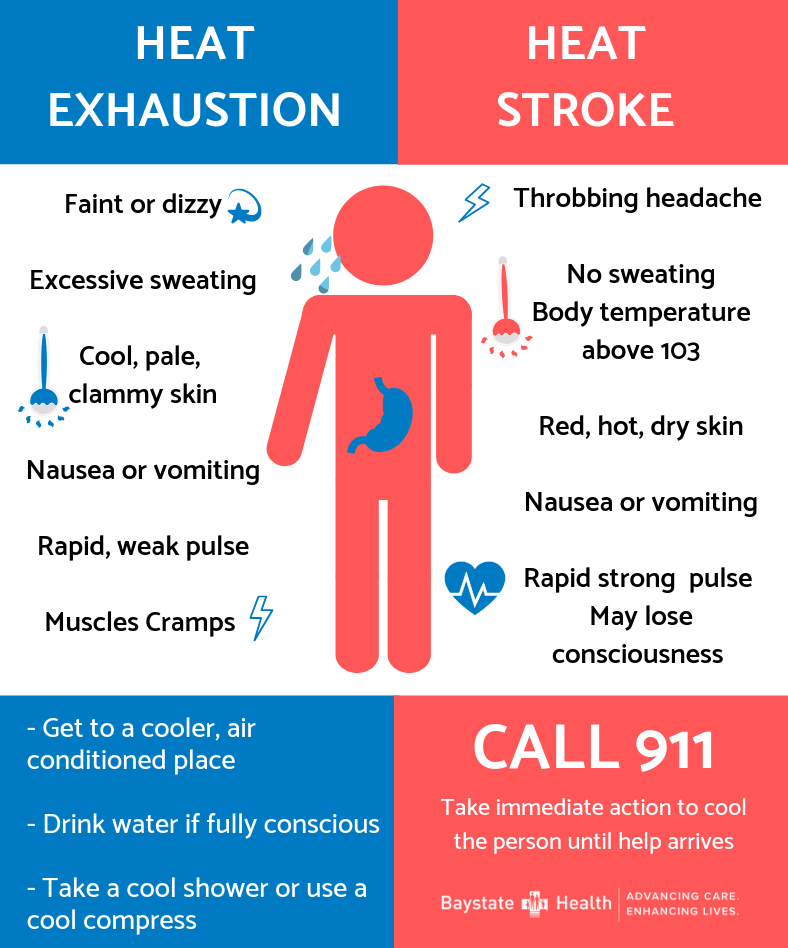 “Heat illness exists on a spectrum, with heat stroke being the most severe form,” says Dr. Gemme. “Heat stroke involves more severe altered mental status, which can include confusion, delirium, seizures and even loss of consciousness. Patients can progress from heat exhaustion to heat stroke if early symptoms aren't recognized and addressed quickly.”
Warning signs of an oncoming heat-related illness could include excessive sweating, leg cramps, flushed skin, nausea and vomiting, dizziness, headache, and rapid pulse. If these occur, get out of the heat and drink liquids. If you don’t feel better soon, call your doctor or visit your local emergency department.
Heat stroke can cause death or permanent disability and requires immediate emergency medical treatment because it can cause damage to the brain and other vital organs.
Warning signs of heat stroke can vary but may include the following: body temperature of 103º F or higher, dizziness, throbbing headache, nausea, confusion, a rapid, strong pulse, and in extremely critical cases, unconsciousness.
Those at greatest risk for developing a heat-related illness are children under 5 and people 65 years of age and older, who have the least ability to regulate their body temperatures, as well as those who work outdoors for a living. Overweight people and others with chronic illnesses, including heart disease or high blood pressure as well as those on certain medications, are also at high risk.
Five Tips for Keeping Cool
- Stay out of the heat. Avoid direct sunlight and strenuous activity outdoors. If possible, remain indoors. If you do not have air conditioning, consider visiting a location that does, such as the mall or a movie theater.
- Do not leave children or pets unattended. Never leave a child or pet in an unattended vehicle in the heat. This can lead to serious and severe health consequences, including heat stroke, brain damage, and even death. Children’s and pet’s body temperatures rise much more quickly than adults, making them particularly vulnerable. Even on relatively “mild” heat days, the temperature inside a vehicle can rise to dangerous levels. Cracking windows provides little protection.
- Stay hydrated. Begin drinking before you go outside and, if exercising, drink one quart of liquid an hour to replace lost fluid. Avoid caffeinated beverages and alcohol which can contribute to the loss of more body fluid. Also, if taking water pills or on a fluid restrictive diet, consult with your physician before increasing your liquid intake.
- Dress for the weather. Wear lightweight, light-colored, loose-fitting clothing and a broad-brimmed hat when outdoors. Stay away from polyester in favor of cotton and linens which are better at repelling the sun’s heat. Also, consider wearing sunglasses and putting on a sunscreen with an SPF 15 or greater.
- Take it slow and easy. Postpone athletic activity or outdoor work during high heat and humidity. Limit outdoor activities to the morning and evening. Drinking sports beverages can replace lost salt and minerals when you sweat. However, those on low-salt diets should check with their doctor before drinking sports beverages. If you work outdoors, in addition to drinking plenty of liquids and dressing appropriately, pace yourself and take frequent short breaks in the shade.
- Eat smaller meals. Instead of the usual rule of eating three square meals a day, eat smaller meals more frequently on days when the sun turns up the heat. Also, avoid high-protein foods, which can increase metabolic heat.
- Be a good neighbor. Be a good neighbor by checking in regularly on others, especially elderly relatives and neighbors who are most at risk for heat-related illnesses. Make sure they are healthy and safe throughout each day and the heatwave.
Related Articles






Back to Top