

Hormone Therapy for Menopause – How to Know if it's Right for You
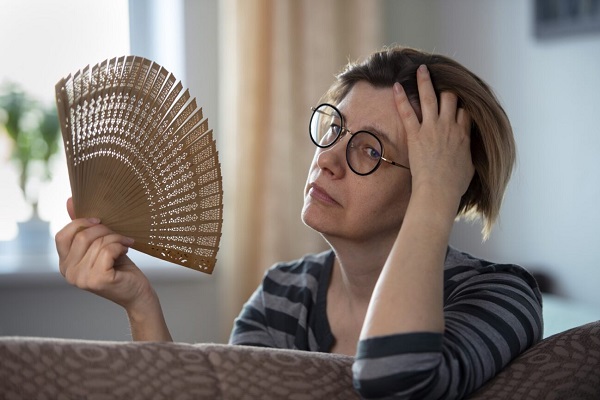
As unnatural as the symptoms may seem, it is a natural part of a woman’s aging process.
According to Rebekah Perks, WHNP, ANP, Baystate Ob/Gyn Group, “In much the same way that a first period serves as a milestone in a woman’s life, so does menopause. And just like periods, menopause involves some physical changes; some welcome, some less so.”
In the same way that different women experience their periods differently, the same is true for menopause. A Certified Menopause Practitioner, Perks explains, “For some women periods were no big deal…a little cramping, a little bloating. But for others, periods might be accompanied by migraines, extreme mood swings, irritability, etc. The same is true for menopause. For some women the symptoms are a blip on the radar, and for others, they can be intrusive and disruptive. For the latter group, hormone therapy can be extremely helpful.”
Understanding Menopause Symptoms
Every female is born with all the eggs she’ll ever have already at home in her ovaries. In addition to storing and releasing eggs throughout your adult life, your ovaries also produce estrogen.
“As egg supply dwindles” says Perks, “the production of estrogen and progesterone decreases. This what triggers common symptoms of menopause. If you’re particularly sensitive to hormone changes, the symptoms can be pronounced and frequent.”
The most common symptoms of menopause include:
- Hot flashes, night sweats
- Irritability
- Sleep disturbance
- Skin changes
- Vaginal dryness
- Loss of tissue elasticity in the vagina
- Hair thinning on head
- Increased hair growth on face
- Change in libido
- Joint pain
- Weight gain
- Memory impairment
- Loss of bone density
Perks adds, “For many women, symptoms lessen or go away shortly after periods end. But, for some women, symptoms may continue for years after that milestone.”
How Hormone Therapy Can Help
Hormone therapy (HT) is used to boost your hormone levels and relieve some of the symptoms of menopause. There are two main types of HT, estrogen therapy (ET) and Estrogen Progesterone/Progestin Hormone Therapy (EPT).
Here’s a quick overview at each therapy, its benefits, and risks:
Estrogen Therapy (ET)
Estrogen therapy involves taking a low dose of estrogen daily, most often in the form of a pill or patch but may also be prescribed as a cream, vaginal ring, gel or spray. ET is very effective at decreasing night sweats, hot flashes, and minimizing bone loss. ET does increase individual risk of blood clots and stroke.
Estrogen Progesterone/Progestin Hormone Therapy (EPT)
Sometimes referred to as combination therapy, this form of HT combines doses of estrogen and progesterone (or progestin, a synthetic form of progesterone). EPT has been shown to decrease a woman’s risk of developing osteoporosis, and colon cancer. EPT does increase individual risk of blood clots and stroke.
Perks emphasizes, “The risk of taking HT increases with age and length of time on HT.”
How Long Should You Stay on Hormone Therapy?
Perk says, “There is no set time limit for how long you can take hormone therapy. Ideally, you should take the lowest dose that works for you for only as long as you need it. You’ll want to work with your doctor to reevaluate your treatment plan each year. If you develop any new medical conditions while taking HT, contact your doctor to see if you should consider adjusting your medication.”
Who Should Not Use Hormone Therapy?
Because of the risks associated with HT, it’s not a good choice for all women. You should not use HT for menopause symptoms if you:
- Have or had breast cancer or endometrial cancer
- Have abnormal vaginal bleeding
- Have had blood clots or are at high risk for them
- Have a history of stroke, heart attack or increased risk for vascular disease
- Know or suspect you’re pregnant
- Have liver disease
“In some cases, the risks associated with HT can be reduced,” says Perks. “For example, the closer to the onset of menopause that a woman begins taking HT lessens risk of complications. The use of a patch versus a pill for ET can also lead to fewer complications. The key is to work with your doctor to weigh the overall benefits and risks for you and determine the best course of treatment.”
Alternatives to Hormone Therapy
For women with risk factors that eliminate HT as an option for treatment symptoms of menopause, Perk notes other medications can help. Here’s a look at a few:
- SSRI/SNRIs (antidepressants): used for hot flashes, night sweats, and irritability
- Gabapentin: used for hot flashes and night sweats
- Oxybutynin: used for hot flashes and night sweats as well as overactive bladder
Some of these medications may have side effects. For example, Oxybutynin can cause dry mouth and eyes.
Other alternatives for treating symptoms of menopause include herbal supplements, hypnotherapy, mindfulness meditation, acupuncture, Chinese medicine, and talk therapy.
“There’s not a lot of research on these treatments to definitively say they work,” says Perks, “But, if you’re doctor determines there’s no risk, there’s no harm in trying.”
Learn More or Find a Menopause Specialist
Learn more about menopause or discuss treatment options available through Baystate Health.
Menopause and Hormone Therapy Webinar

Related Articles









Back to Top