

Interventional Cardiology Fellowship
Program Philosophy
The UMass Chan Medical School-Baystate Interventional Cardiology Fellowship is built on a simple philosophy: outstanding interventional cardiologists are developed through meaningful responsibility, thoughtful mentorship, and progressive independence. Our fellowship combines a busy tertiary referral practice with individualized teaching, broad procedural exposure, and a faculty whose commitment to education shapes every aspect of the training experience. Fellows are challenged early, supported continuously, and prepared to enter practice with the technical expertise, clinical judgment, and leadership skills required of today's interventional cardiologist.
Program Overview
The program began in 1985 with a single fellow and expanded to two fellows in 1987. Since 2007, the fellowship has trained three interventional fellows each year, and the program recently reached a major milestone by training its 100th interventional cardiology fellow. As the tertiary referral center for Western Massachusetts, Baystate Medical Center offers broad exposure to complex coronary artery disease, structural heart disease, cardiovascular emergencies, and an optional peripheral vascular experience. The fellowship combines a busy coronary intervention program with a mature and expanding Structural Heart Program, providing experience across the spectrum of contemporary interventional cardiology.
Training is intentionally personal. With three interventional fellows working alongside eleven dedicated interventional cardiologists, trainees have close access to faculty, individualized mentorship, and meaningful procedural responsibility from the beginning of fellowship. Each attending brings a distinct training background, procedural style, and clinical perspective, allowing fellows to learn multiple approaches while developing their own clinical judgment. The program is also flexible by design: as the year progresses, faculty work with each fellow to tailor portions of the experience toward individual interests and career goals, whether those interests are complex coronary intervention, structural heart disease, peripheral vascular intervention, research, or another area of interventional practice.
Our Culture
The defining strength of the Baystate fellowship is its people. Our faculty genuinely enjoy teaching and view fellowship as a partnership built on trust, respect, collegiality, and a shared commitment to developing the next generation of interventional cardiologists.
Education extends far beyond scheduled conferences. Every procedure, clinic visit, Heart Team discussion, and patient encounter becomes an opportunity for teaching. Faculty intentionally balance autonomy with mentorship - providing immediate feedback, encouraging thoughtful discussion, and increasing responsibility from day one as fellows grow technically and clinically.
Fellows are treated as valued members of the team from the first day of training. Questions are encouraged, collaboration is expected, and fellows work alongside faculty as future colleagues. This environment allows trainees to develop not only procedural expertise, but also the professionalism, leadership, adaptability, and commitment to education that will shape their careers.
Cardiac Catheterization Laboratory
Fellows train in four state-of-the-art Philips catheterization laboratories equipped with low-dose radiation technology and designed to support both advanced coronary and structural heart interventions. Each laboratory incorporates intravascular ultrasound (IVUS), optical coherence tomography (OCT), coronary physiology including FFR and iFR/rFR, and microvascular assessment. The laboratories are also equipped to support structural procedures guided by transesophageal echocardiography (TEE), intracardiac echocardiography (ICE), fluoroscopy, and Philips EchoNavigator fusion imaging. These resources allow fellows to become comfortable with the imaging, physiologic assessment, and procedural technologies that define modern interventional practice.
Cardiac Catheterization Laboratory Experience
Hands-on procedural experience is a hallmark of the Baystate fellowship. From the first day of training, fellows serve as the primary operator for virtually all coronary interventions under the direct supervision and mentorship of experienced faculty. This responsibility spans the full spectrum of coronary intervention - from routine PCI to complex coronary procedures - and creates an environment in which technical maturity and procedural judgment develop through experience.
Graduates typically perform more than 450 PCI procedures while gaining extensive experience with IVUS, OCT, coronary physiologic assessment, calcium modification using rotational atherectomy and intravascular lithotripsy, chronic total occlusion intervention, and mechanical circulatory support. Approximately 10-15% of coronary interventions involve advanced calcium modification. Procedural volume is paired with deliberate teaching: faculty emphasize case selection, procedural planning, technical execution, complication management, and reflective learning after each case.
Structural Heart Disease Experience
The Structural Heart Program provides broad exposure to transcatheter aortic valve replacement (TAVR), left atrial appendage occlusion (LAAO), transcatheter mitral and tricuspid interventions, and ASD/PFO closure. Fellows who pursue structural training participate in the complete continuum of care - from outpatient evaluation and multidisciplinary Heart Team discussions through procedural planning, intervention, and longitudinal follow-up.
Baystate does not have a separate structural heart fellowship, so interventional cardiology fellows have the first opportunity among trainees to participate in structural procedures. As technical proficiency develops, fellows assume progressively greater responsibility and serve as primary operators for many structural interventions under faculty mentorship. Procedures incorporate advanced multimodality imaging, including fluoroscopy, TEE, ICE, and EchoNavigator fusion imaging, and fellows are actively involved in imaging interpretation, device selection, procedural strategy, technical execution, and post-procedural management.
As the Structural Heart Program continues to expand, fellows also gain exposure to emerging transcatheter technologies and evolving therapies. This combination of procedural participation, multidisciplinary decision-making, and longitudinal care provides a strong foundation for fellows interested in incorporating structural heart disease into their future practice.
Peripheral Vascular Disease Experience
Interventional Cardiology fellows have the option to participate in the full spectrum of ambulatory and inpatient evaluation, diagnostic testing, and intervention for patients with peripheral vascular disease. Collaboration with Baystate's Vascular Surgery program has also helped several interventional cardiology fellows obtain Registered Physician in Vascular Interpretation (RPVI) certification and hospital credentialing after completion of the one-year fellowship.
Our Graduates
The ultimate measure of a fellowship is the success of its graduates. Baystate alumni have gone on to rewarding careers in private practice, integrated health systems, and academic medical centers. They enter practice prepared to perform complex coronary and structural interventions, care for critically ill cardiovascular patients, and contribute meaningfully to multidisciplinary cardiovascular teams.
Many graduates now lead catheterization laboratories, establish or expand structural heart and complex coronary programs, mentor trainees, and teach the next generation of interventional cardiologists. Others remain active in clinical research, innovation, and quality improvement. Recent graduates have achieved a 100% pass rate on the Interventional Cardiology board examination, reflecting both the clinical depth of the program and the strong educational foundation provided throughout the year.
Our graduates continue to build on their Baystate training long after fellowship, adapting what they learned here to new practice environments, new technologies, and new leadership roles. Their careers reflect the program's central goal: to develop interventional cardiologists with technical expertise, sound judgment, intellectual curiosity, and the ability to continue growing throughout their professional lives.
Meet Our Team


Fellowship Director
Ashequl Islam, MD, FACC
Program Administrator
Paige DuPilka
E-mail: Paige.DuPilka@baystatehealth.org
Education
Education is woven into every aspect of fellowship. While protected educational time provides a structured curriculum, many of the most meaningful lessons occur in the catheterization laboratory, where faculty use each case to teach procedural technique, clinical reasoning, and decision-making.
Dedicated educational experiences include twice-weekly conferences - a faculty-driven didactic conference and an interactive case conference - as well as Journal Club, Morbidity & Mortality Conference, multidisciplinary conferences with Cardiac Surgery focused on structural heart disease, high-risk coronary discussions, and weekly Structural Heart/Heart Team meetings. Fellows are encouraged to present challenging cases, participate actively in discussion, and learn from the collective experience of faculty and the multidisciplinary team.
Research & Scholarly Activity
Scholarly activity is an important part of fellowship and can be tailored to each fellow's interests. Opportunities include participation in clinical trials, investigator-initiated studies, quality improvement projects, abstract development, and manuscript preparation. Faculty provide mentorship throughout the process, from identifying a meaningful question and developing a project to preparing work for presentation or publication.
Fellows are strongly encouraged to attend regional and national scientific meetings and to present their work whenever possible. These meetings provide opportunities to share original research and challenging clinical cases, learn about advances in the field, build professional networks, and engage with interventional cardiologists from across the country.
A Day in the Life
The day begins at 7:30 a.m. Tuesday and Thursday mornings are dedicated to faculty-led didactic and case conferences, while other mornings begin in the catheterization laboratory. A dedicated Advanced Practice Provider manages many post-procedure discharges from the previous day, allowing fellows to focus on patient evaluation, procedural planning, and the day's cases.
Throughout the day, fellows work alongside one or more attending interventional cardiologists performing a diverse mix of coronary and structural heart procedures. From the first day of fellowship, fellows serve as the primary operator for virtually all coronary interventions and progressively expand their role in structural heart and, when chosen, peripheral vascular procedures. Working with eleven faculty members exposes fellows to multiple procedural techniques and clinical perspectives. Interventional fellows also work closely with General Cardiology fellows, sharing the documentation and order-entry workload while serving as mentors and procedural teachers.
When not on call, the clinical day generally concludes around 6:00-7:00 p.m. Call is shared equally among the three interventional fellows, including weekend coverage. While on call, fellows work side-by-side with the attending caring for patients with STEMI, cardiogenic shock, unstable acute coronary syndromes, and other cardiovascular emergencies. Fellows serve as the primary operator for STEMI and other emergent coronary interventions under direct faculty supervision and share responsibility for emergency questions and activations from the Emergency Department, consulting services, surrounding hospitals, and the Cardiac Intensive Care Unit. Weekend call commonly includes four to five emergent procedures, providing extensive experience caring for the sickest patients while working alongside faculty as trusted colleagues.
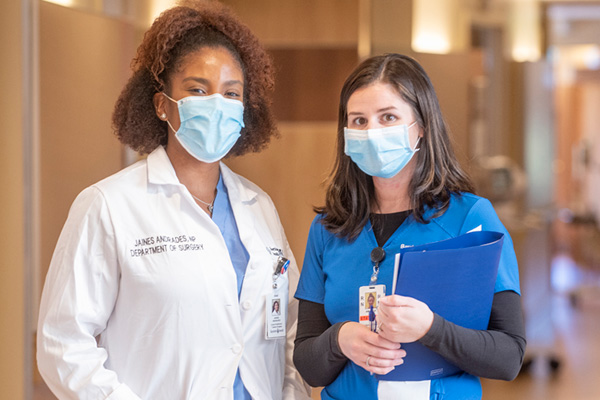
Equity, Inclusion, and Belonging

Western Mass: A Great Place to Live and Learn
Back to Top