


The Future of Breast Cancer Care: How Advanced Radiation Therapy Is Improving Survival and Comfort
This article was reviewed by our Baystate Health team to ensure medical accuracy.
 Seth A. Kaufman, MD
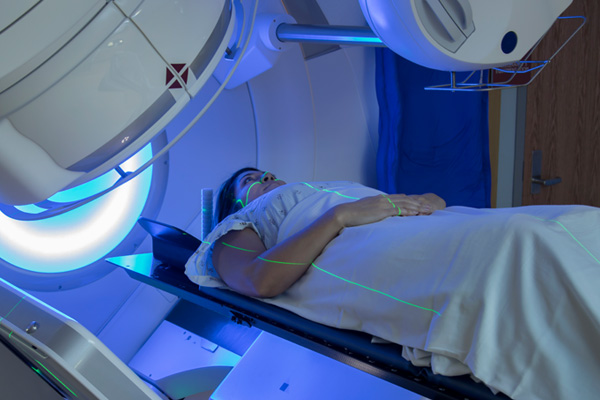
Recent advances in radiation therapy (RT) are transforming breast cancer treatment by providing patients with more precise, effective, and personalized care than ever before. Dr. Seth Kaufman, a radiation oncologist with Baystate Health, says these innovations are “reducing side effects, shortening treatment timelines, and improving outcomes—especially for early-stage patients.”
A New Era of Precision in Breast Cancer Radiation
Radiation has played a key role in breast cancer treatment for over a century.
Dr. Kaufman notes that, “The presence of cancer cells, or microscopic-residual disease, in the body following breast cancer surgery is relatively common. How much disease gets left behind varies based on the type of surgery, the original tumor characteristics, and more. Any cells left behind can potentially lead to a recurrence of breast cancer. RT can significantly lower the risk of cancer surviving, and thus, recurrences happening.”
What's even more exciting is that new technology lets us treat each person's cancer more safely, quickly, and personally. “The precision we now use allows for more effective doses to be delivered directly to the tumor while protecting healthy tissue. Patients often experience fewer side effects and spend less time receiving treatment.”
How Radiation Therapy Works
To understand RT, it helps to know how cancer cells differ from healthy cells. Dr. Kaufman puts it this way: “To reproduce quickly, cancer cells must give something up. Lucky for us, one thing they sacrifice is the ability to repair themselves the same way healthy cells do." RT capitalizes on this inability.
“Radiation damages the DNA strand in both healthy cells and cancer cells. Healthy cells can heal and recover much more efficiently than cancer cells. Cancer cells, however, can’t keep up with cumulative radiation damage and die.”
How Radiation Therapy is Delivered at Baystate Health
Baystate Health uses some of the most advanced technology and methods to deliver RT for breast cancer. These technological advances have transformed the operation of the workhorse machine of the radiation department: the linear accelerator. These updates help us deliver radiation with greater accuracy, making your treatment safer and more effective.
A linear accelerator, or LINAC, produces high-energy X-rays or electrons that are precisely aimed at the tumor to destroy cancer cells.
Dr. Kaufman explains, “The beauty of the LINAC is that it lets us adjust the radiation dose based on the size, shape, and location of the cancer. The patient lies on a bed while the machine rotates around them, allowing it to target the cancer from many angles. It’s pre-programmed to adjust the shape of the beam as it moves through its positions to minimize damage to healthy cells and tissue.”
He adds that how much radiation is given and how often varies from patient to patient.
“While we have traditionally recommended small daily doses of RT over several weeks for most breast cancers, we can now offer more condensed treatment schedules for certain low-risk, early-stage tumors. In these cases, patients may receive just a few larger doses, delivered once a week for five weeks or once a day for a single week. This approach is especially helpful for patients who must travel long distances or who face other medical or social issues making a longer treatment course challenging.”
Is Radiation Therapy for Everyone?
Whether to get RT is a personal decision based on your specific situation.
Dr. Kaufman points out that research shows the treatment is often very effective. “For both early-stage low-risk invasive cancers and pre-invasive cancers, the benefits of RT are significant. For example, for patients with early-stage low-risk invasive cancers who have a lump surgically removed but do not receive RT, the recurrence risk at 10 years is 35%. For those who do receive RT, the recurrence risk for the same 10-year period drops to 19%.”
For patients with pre-invasive cancers, recurrence patterns follow a similar trend: 24% risk of recurrence within 12 years without RT, compared to 12% with RT. “However,” adds Dr. Kaufman, “Of the patients who forego radiation and experience a recurrence, half of those cases are invasive. In contrast, only one-third of recurrences after radiation are invasive.”
Even so, he shares that there are some circumstances where RT might have only a modest benefit.
Specifically, in the case of patients with low-risk invasive disease, the following factors may suggest RT may not be not necessary:
- Age 65 or older
- Small tumors (no more than 2cm)
- No cancer in the lymph nodes
- Patient is taking hormone-blocking medication
- The removed tumor is determined to be less aggressive
- No cancerous cells found along the edges of the removed tumor
The recurrence rate for these patients at 10 years without radiotherapy is 10%, while the recurrence risk for those receiving RT is 2%. Some people may feel comfortable skipping radiotherapy knowing there is a 90% chance the cancer will not come back, while others may prefer to do everything possible to minimize that risk and choose to receive radiation.
For those with low-risk pre-invasive disease, the following factors may suggest RT may be safely omitted:
- The removed tumor is determined to be less aggressive
- The tumor is no larger than 2.5cm
- The edges of the removed tumor have at least 3mm of healthy, cancer-free tissue
The recurrence rate for these patients who do not opt for RT is 1% per year, or 10% at 10 years. Receiving RT reduces the risk by half. For younger patients or those expected to live longer, this risk can be substantial over their lifetime and RT becomes more impactful.
For patients with ductal carcinoma in situ and struggling with an RT decision, Dr. Kaufman often suggests they take a “commercial predictive assay.”
“There are several commercially available assays, and we have used the DCISionRT test as we feel it has been well validated. This assessment helps determine if radiation therapy is needed after surgery,” he explains. “It works by analyzing the biology of the cancer, looking for specific biomarkers and pathological factors. Using this information in combination with clinical data, it creates a recurrence risk assessment to help the patient, along with their doctor, make a more informed decision about whether to pursue RT or not.”
Making Radiation Therapy Safer
Even the best technology can't make RT risk-free, but we use special methods to keep you as safe as possible.
Deep Inspiration Breath Hold (DIBH)
Used for left-sided breast cancer patients, DIBH reduces potential damage to the heart by moving it away from the radiation beam. This is done by having the patient take a deep breath and hold it for 20–30 seconds, which pulls the heart away from the path of the radiation. Special cameras track your breathing and pause the treatment if you need to breathe out. This reduces the amount of radiation that reaches the heart and helps lower the risk of heart problems in the future.
Prone Breast Radiotherapy
This technique involves having the patient lie face down on a special table that allows the breast to hang away from the body. This allows for RT to be delivered on a path that does not involve surrounding organs, such as the heart and lungs.
Partial Breast Radiation Therapy
This targeted radiation treatment for early-stage breast cancer delivers a high dose of radiation right to the tumor site in less time. Because less tissue is treated, this approach has become the preferred choice if you need RT again to treat a cancer that has come back.
Some partial breast RT options involve inserting a device into the breast to deliver radiation directly to the cancer. While the required surgery is minor and the device is not permanently implanted, side effects, such as swelling or infection, can occur. At Baystate, we are using non-invasive external beam X-ray treatment with the LINAC to deliver partial breast RT when needed.
A New Era of Care Brings New Choices
The rapid advancements in radiation therapy for breast cancer are transforming the precision of care and providing patients with more options than ever.
However, not all RT options are appropriate for everyone.
If you’re facing a breast cancer RT decision, contact Baystate Radiation Oncology. We’ll help you weigh your options and make a decision that promises the best possible outcome while respecting your health and lifestyle.
What’s New in Breast Cancer Radiation: Faster, Safer, Targeted Care


Health & Wellness Tips
Related Articles










Back to Top